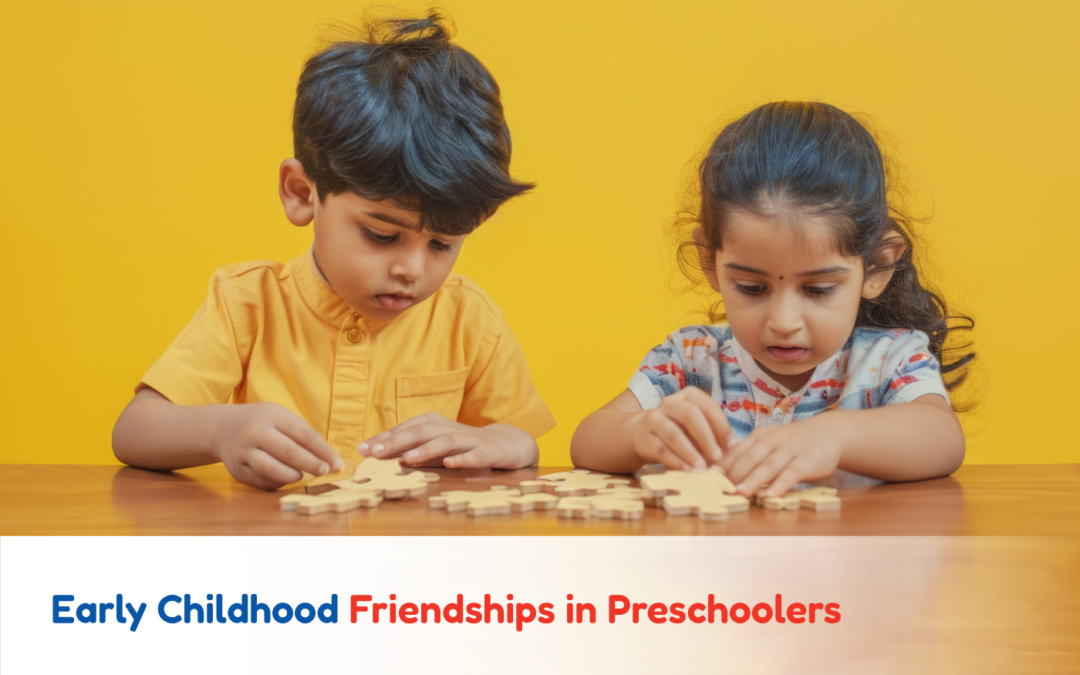
Early childhood friendships (ages 3–6) play an important role in helping preschoolers build social, emotional, and thinking skills. Through everyday interactions and play, children learn how to share, communicate, cooperate, and understand emotions. These early connections also boost confidence and help children feel a sense of belonging in group settings.
Key Aspects of Early Childhood Friendships
- Developmental importance: Early friendships support emotional growth, social understanding, and confidence, which continue to shape behavior as children grow
- Play-based connections: Preschoolers form friendships through shared play, simple conversations, and daily classroom interactions
- Social skill building: Children learn communication, cooperation, and how to manage emotions during interactions with peers
How to Support Early Childhood Friendships
- Encourage interaction: Create opportunities for children to spend time with peers in a relaxed and comfortable setting.
- Model positive behavior: Demonstrate kindness, respect, and clear communication in daily interactions.
- Guide gently: Help children understand sharing, turn-taking, and resolving small conflicts through simple conversations.
Introduction
Many parents observe this change during preschool years. A child who once stayed close now talks about a friend all the time. A playdate feels more exciting than staying at home. Sometimes, a preschooler even says they want to sit or play only with a specific friend.
This is where early childhood friendships begin to take shape.
In preschool, children enter a world filled with new faces, routines, and interactions. These daily experiences create chances for connection. Some friendships form quickly. Some take time. Each one plays a role in a child’s social growth.
Understanding this phase helps parents feel more at ease with these changes.
What Do Early Childhood Friendships Look Like in Preschool?
Early childhood friendships in preschool are simple, yet meaningful.
A preschooler may choose to play with the same child every day. A preschooler may talk about a friend during meals or before bedtime. These small signs show growing attachment.
These friendships often include:
- Shared playtime: Preschoolers bond while playing, learning, and spending time together in class
- Simple conversations: Children express thoughts in direct ways, often without hesitation
- Emotional connection: Small actions like sharing toys or helping a friend begin to feel important
These early bonds may seem small, yet they carry strong emotional value for preschoolers.
Why Do Preschoolers Start Choosing Friends More Often?
This shift is a natural part of early childhood friendships.
Preschoolers begin to explore independence in small ways. Choosing a friend, sitting next to someone, or wanting to play together helps build confidence.
This happens because:
- Developing independence: Preschoolers begin making small social choices on their own
- Feeling of belonging: Being part of a group or friendship feels exciting and comforting
- New environment exposure: Preschool introduces children to peers with different personalities
This does not replace the parent-child bond. It simply expands the child’s world.
How Do Early Childhood Friendships Influence Preschool Behavior?
Early childhood friendships play a strong function in shaping preschool behavior.
Preschoolers learn by watching others. They observe how friends speak, react, and behave. Over time, they begin to adapt.
This can lead to:
- Improved communication: Preschoolers learn how to express needs and listen to others
- Understanding sharing and waiting: Group settings teach tolerance and teamwork.
- Adapting behavior: Children modify based on how others respond.
These changes help preschoolers feel more comfortable in social settings.
Can Early Childhood Friendships Bring Positive Changes in Preschoolers?
Yes, early childhood friendships often lead to visible positive changes.
A preschooler may begin to include others in play. A preschooler may show kindness or provide assistance without being asked. These are important signs of growth.
These changes happen through:
- Observing positive behavior: Preschoolers notice kindness and cooperation in peers.
- Experiencing group interaction: Daily classroom activities promote connection
- Repeating positive actions: Behaviors that feel good are practiced more often
Many of these changes happen naturally during daily preschool experiences.
How Should Parents Respond When Preschoolers Prioritize Friends?
A calm and sensitive approach supports early childhood friendships in a healthy way.
Parents may feel a shift, yet preschoolers still need emotional security at home.
Helpful ways to respond include:
- Staying involved: Ask about friends and listen with interest
- Maintaining connection: Spend quality time together without comparison
- Guiding gently: Share values in a simple and clear way
This helps preschoolers feel reassured while exploring friendships.
How Do Preschool Environments Support Early Childhood Friendships?
Preschool plays a major role in developing early childhood friendships.
Children interact daily, share experiences, and learn how to connect in a structured setting. Teachers guide children through social situations.
This helps preschoolers:
- Feel comfortable in group settings.
- Build communication skills through interaction.
- Understand different personalities and responses.
Regular exposure improves social confidence.
What Role Does Kids Castle Play in Early Childhood Friendships?
At Kids Castle, early childhood friendships are nurtured in a warm and structured environment.
Preschoolers are guided through interactions, encouraged to express themselves, and supported during emotional moments. Every child is given space to connect and grow at their own pace.
This approach helps preschoolers build confidence, develop social comfort, and form meaningful friendships.
What Should Parents Pay Attention To During Preschool Years?
Preschool years are a time of steady social growth.
Parents can focus on:
- Encouraging conversations about school and friends in a relaxed way
- Supporting independence while staying emotionally available
- Reinforcing kindness and respect at home
- Allowing children to explore friendships without stress
A well-rounded approach helps preschoolers grow with confidence.
Conclusion
Early childhood friendships play a meaningful role in shaping how preschoolers connect, communicate, and grow with others. These first bonds teach children how to share, express feelings, and feel a sense of belonging outside the home.
At Kids Castle, this journey is supported with care and intention. Children are given the space to build early childhood friendships in a safe, nurturing environment where guidance is gentle and interactions are meaningful. Each experience helps children grow in confidence, understand emotions, and form positive relationships.
With the right environment and support, early childhood friendships become a strong foundation for a child’s social and emotional development, and Kids Castle ensures that every child takes this step with comfort and confidence.