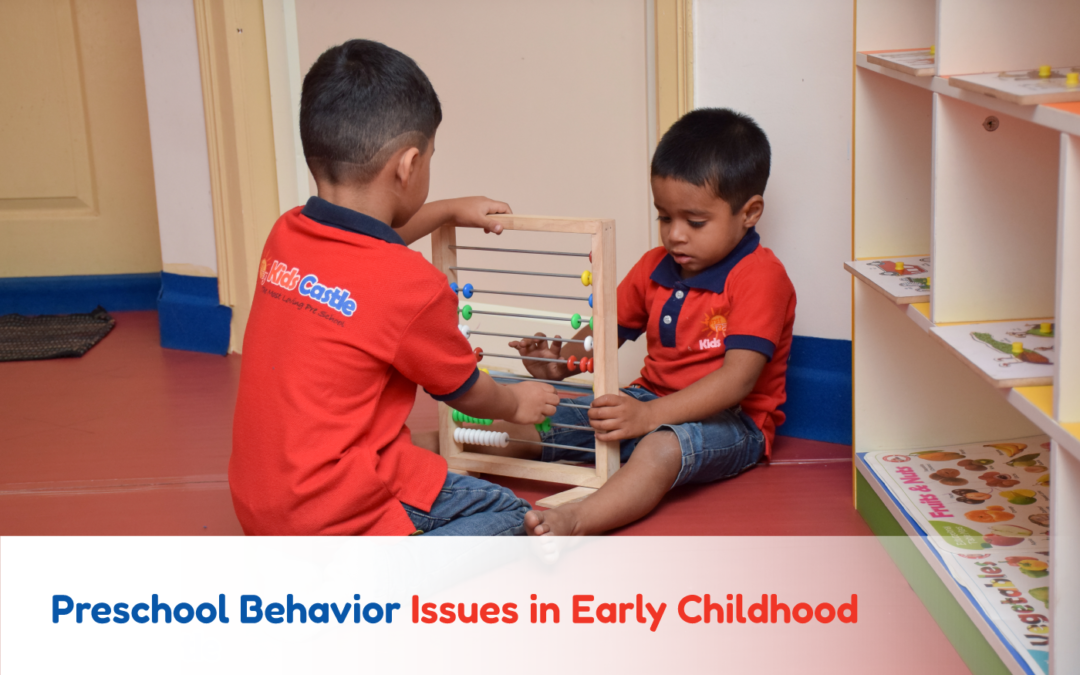
Preschool behavior issues are a natural part of early childhood as children begin to explore social environments, observe others, and adapt to new experiences. During this phase, children may show sudden changes in behavior, emotional responses, or habits as they learn from peers and surroundings. These behaviors reflect growth in social understanding and emotional development, rather than concern.
Key Aspects of Preschool Behavior Issues
- Learning through observation: Children closely watch peers, teachers, and environments, often imitating behaviors as part of understanding social interactions.
- Emotional and social growth: Changes in behavior often come from developing emotional awareness and the ability to respond to different situations
- Influence of environment: Exposure to new settings, like preschool, introduces varied behaviors, which children begin to adopt and explore
How to Support Children Through Preschool Behavior Issues
This shift is a natural part of early childhood friendships.
Preschoolers begin to explore independence in small ways. Choosing a friend, sitting next to someone, or wanting to play together helps build confidence.
This happens because:
- Developing independence: Preschoolers begin making small social choices on their own
- Feeling of belonging: Being part of a group or friendship feels exciting and comforting
- New environment exposure: Preschool introduces children to peers with different personalities
This does not replace the parent-child bond. It simply expands the child’s world.
Research shows that structured systems and integrated processes play a key role in improving outcomes and adaptability. A study published on Taylor & Francis Online highlights how aligned approaches can enhance performance, efficiency, and long-term business growth.
What Do Preschool Behavior Issues Look Like in Everyday Life?
These challenges show up in simple, everyday situations.
A kid can evaluate himself in relation to his peers, an attitude learned in school, or respond dramatically to some minor occurrence. Such behavior typically involves new patterns, such as frequent comparisons among peers and sudden behavioral alterations.
What makes such instances complicated is that they tend to form unexpectedly. At one moment, a kid appears happy and friendly; the next, they use language or body language that seems entirely unfamiliar. Parents are unsure if there was any occurrence or if the kid is only going through these emotions. In most cases, the answer is both.
Such acts are frequently evidence that kids observe and learn from their surroundings.
Why Do Preschool Behavior Issues Begin?
They emerge as soon as kids understand the outside world.
They watch their classmates, teachers, and their environment. They are exposed to various behaviors and thoughts. Typical examples may include their curiosity about various behaviors, their need to blend in with others, and their keen observation of other children and grown-ups. They can help us understand how kids process social interactions.
Why Do Some Feel Uncomfortable?
Some behaviors feel unfamiliar because they come from outside influences. A child spends time in a shared environment with many personalities, and each interaction introduces something new.
This can lead to behavior that feels out of place at home, expressions that reflect peer influence, and changes in response patterns. These moments highlight the gap between values at home and those encountered in the outside world.
According to Child Mind Institute, highlights that early behavioral changes are common and can be managed through consistent guidance and understanding.
Why Do Some Feel Uncomfortable?
Some behaviors feel unfamiliar because they come from outside influences. A child spends time in a shared environment with many personalities, and each interaction introduces something new.
This can lead to behavior that feels out of place at home, expressions that reflect peer influence, and changes in response patterns. These moments highlight the gap between values at home and those encountered in the outside world.
According to Child Mind Institute, highlights that early behavioral changes are common and can be managed through consistent guidance and understanding.
How Can Parents Respond Calmly?
Calm responses help children process what they are experiencing. A child learns more from conversation than correction.
Helpful ways to respond include asking where the behavior was learned, explaining what is followed at home, and guiding without creating fear. It also helps to stay consistent. Children feel more secure when they know what to expect from the adults around them. A steady, warm reaction, even when the behavior is frustrating, sends a message that home is a safe place to talk and learn.
Preschool behavior issues become easier to handle when approached with patience and consistency.
Research available on PubMed, shows that early self-control and behavior play an important role in long-term emotional and social development.
How Do Daily Environments Shape Behavior?
Every environment shapes how children behave.
At home, children observe family behavior. At school, they experience group interaction. Each setting adds to their learning. This helps children understand different behaviors, adapt to social situations, and build communication skills.
What Should Parents Focus On?
Steady support from parents makes a real difference during this phase.
Key focus areas include:
- Encouraging open communication at home
- Reinforcing values consistently
- Supporting positive habits when they appear
- Staying calm and patient in responses
When parents stay involved and observant, children feel secure enough to navigate new social experiences with confidence.
Conclusion
Preschool behavior issues are a natural part of early childhood. Children observe, absorb, and adapt every single day. Some behaviors may feel unfamiliar. Some may feel encouraged. All of them are part of learning.
At Kids Castle, we understand that every child’s journey looks a little different. Our educators are trained to recognize these behavioral shifts and respond with patience, structure, and warmth. We create an environment where children feel safe to explore, make mistakes, and grow at their own pace.
Through guided interactions, social experiences, and consistent support, Kids Castle helps children move through these early challenges with confidence. Parents can stay closely connected through open communication with our team, ensuring that what is practiced at school and at home works together.
If you are navigating this phase with your child, you do not have to do it alone. Kids Castle is here to walk alongside your family every step of the way.